
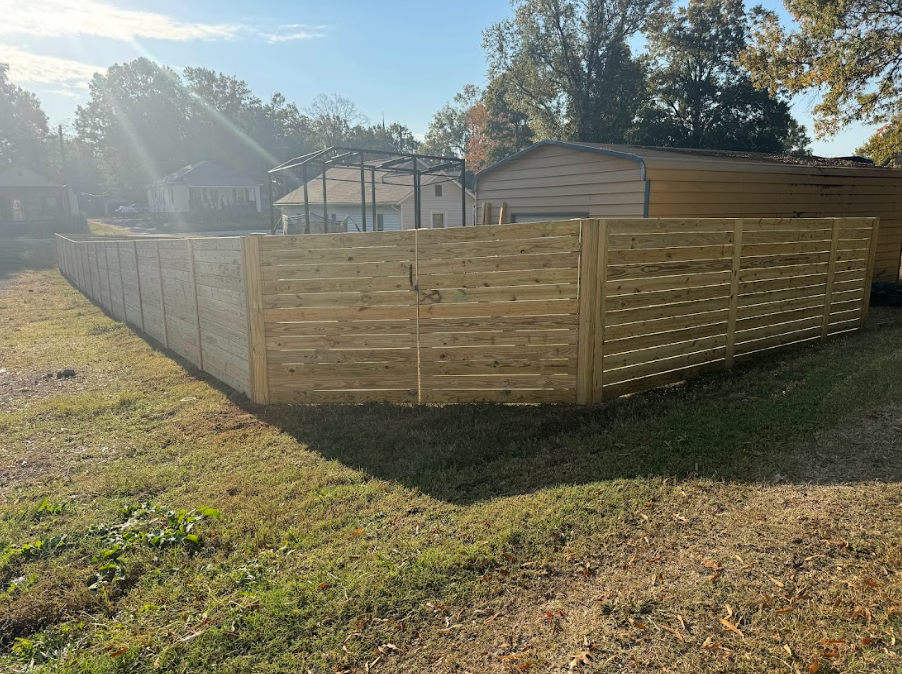
Create Privacy With Traditional Fencing Material
Wood Fence Installation in Belmont for homeowners needing full privacy screens and custom design flexibility
RM Fence LLC installs wood fences for homeowners in Belmont, North Carolina who want to block sightlines from neighboring properties, enclose a backyard for children or pets, or add a natural-looking boundary that complements traditional home architecture. You might choose wood for a tall privacy fence with no gaps between pickets, a decorative picket fence with pointed or rounded tops, or a shadowbox style that looks finished from both sides. The installation crew sets pressure-treated posts in concrete, attaches horizontal rails, and fastens vertical pickets using galvanized screws or nails that resist corrosion from rain and humidity.
Popular styles include board-on-board for complete privacy, spaced picket for a more open look, and horizontal slat designs that suit modern home exteriors. Wood fencing adapts easily to sloped yards, curved property lines, and custom heights, and you can stain or paint it to match your home's trim or leave it to weather naturally to a silver-gray patina. Pressure-treated pine is the most common material for posts and often for pickets and rails, though cedar offers natural rot resistance and a tighter grain that holds stain more evenly.
Contact RM Fence LLC for a free quote that includes measurements, material recommendations, and a breakdown of what the installation will involve on your specific property.
What Wood Fencing Delivers Over Time
You receive a fence that provides immediate privacy, reduces street noise, and defines outdoor spaces for specific uses such as a garden bed, play area, or patio. The crew builds the fence with rails attached to the post faces or set into routed notches, depending on the design, and ensures that each section aligns vertically and horizontally so pickets form consistent lines without waves or bows. Posts are set at least two feet deep, with concrete extending above grade to shed water away from the wood.
After installation, you will see a fence that stands plumb, with gates that swing freely and latch without needing adjustment, and pickets that meet the top and bottom rails evenly across the entire run. RM Fence LLC uses fasteners appropriate for exterior exposure and ensures that any cut ends on posts or rails are sealed or positioned to prevent water from entering the grain. The fence will need periodic maintenance including staining or sealing every few years to prevent moisture damage, checking for loose boards, and trimming back vegetation that holds moisture against the wood.
Custom layout includes planning for gates wide enough for mowers or wheelbarrows, arched or decorative tops on sections facing the street, and transitions between different heights if you want a taller privacy section in the backyard and a shorter decorative section along the front yard. The installation does not include removing old fencing, grading uneven ground, or trimming tree roots that interfere with post placement, which you handle before the crew arrives. Wood will expand and contract slightly with seasonal humidity changes, so small gaps or minor movement are normal and do not indicate poor workmanship.
Common Questions About Wood Fence Installation
Homeowners typically ask about material choice, maintenance requirements, and how the fence will age in local weather conditions.
How long does a wood fence last in Belmont's climate?
Pressure-treated pine posts and rails typically last fifteen to twenty years, while pickets may need replacement after ten to fifteen years, depending on exposure to moisture, sun, and whether you maintain a protective stain or sealant.
What's the difference between pressure-treated pine and cedar?
Pressure-treated pine is chemically infused to resist rot and insects and costs less, while cedar contains natural oils that repel moisture and pests, resists warping, and weathers to a lighter color without treatment.
Why do some wood fences turn gray?
Ultraviolet light breaks down the wood's lignin, and moisture raises the grain, causing untreated wood to fade to gray over several seasons; staining or sealing blocks UV and moisture penetration, keeping the wood closer to its original color.
When should I apply stain or sealant to a new wood fence?
Wait at least a few weeks after installation so the wood can dry and any surface moisture from treatment chemicals can evaporate; applying sealant too soon traps moisture and prevents proper adhesion.
What style of wood fence works best for a sloping yard?
Racked fencing follows the slope with pickets cut at an angle to remain vertical, while stepped fencing creates level sections that drop in height at regular intervals; both methods keep the fence structurally sound on uneven terrain.
RM Fence LLC provides free on-site consultations where you can see material samples, discuss style options, and get a clear estimate based on your property's specific layout and soil conditions.